Making Hōjicha Latte in a world that doesn't want you to
An ode to slowness
Hōjicha (ほうじ茶) is a roasted Japanese green tea. It’s not green to the eye though, its color is closer to coffee than it is green tea. This is due to the roasting process of its leaves over charcoal, which also removes the usual bitterness of green tea, replacing it with a more earthy and toasty flavour. The process also reduces the amount of caffeine it contains, making it a suitable drink to pair with a nightly writing session, like I’m having right now.
I like my Hōjicha with oat milk, on ice. I buy it as powder, so to prepare it I use Japanese traditional tools. These include the bamboo whisk (or chasen) that sits on its holder (or kusenaoshi), a bowl to whisk (or chawan) and the bamboo spoon (or chashaku). I also use a strainer to break the powder evenly, so it mixes smoothly with the water.
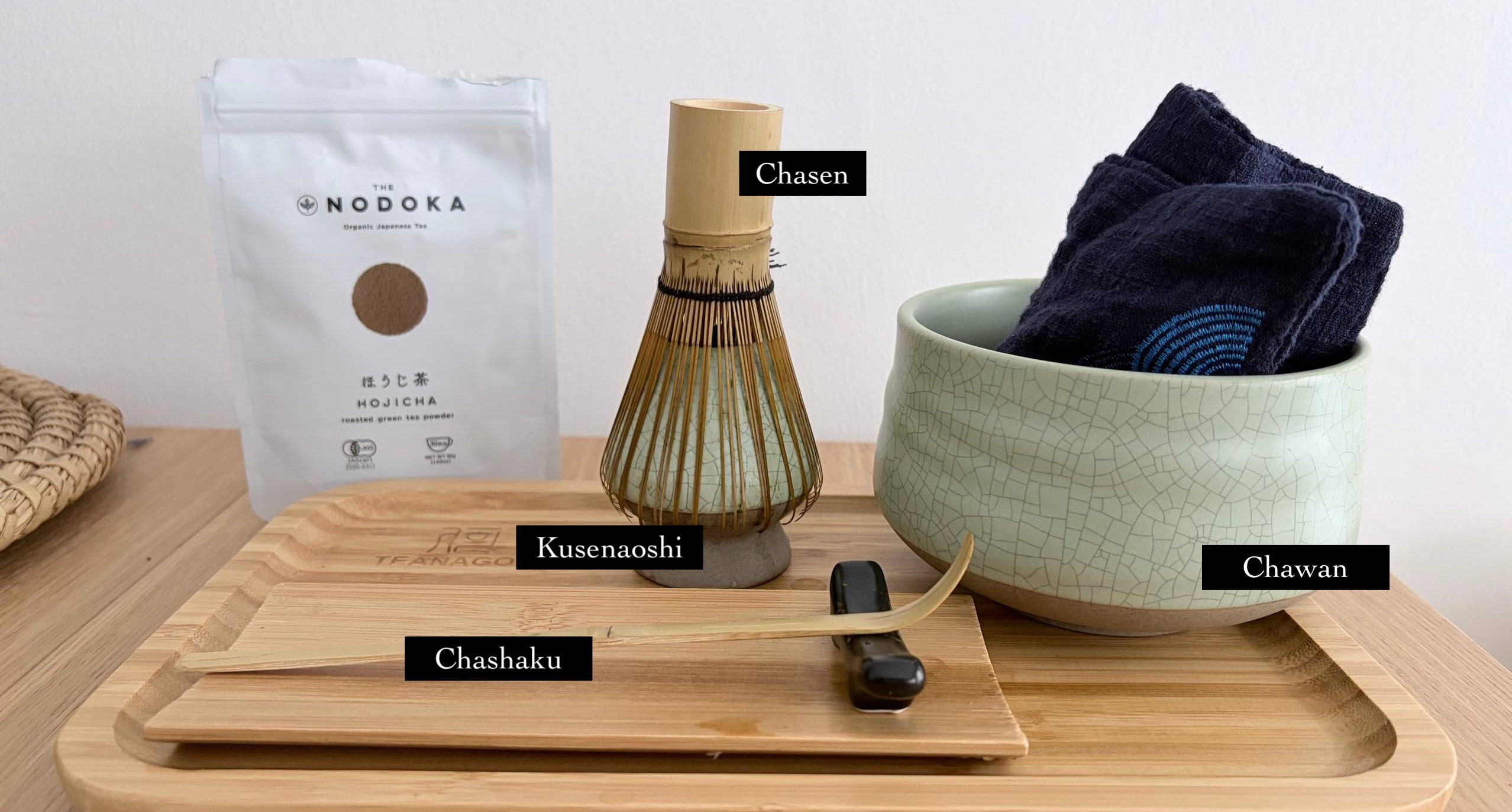 Traditional tools
To prepare it I start by turning on my kettle to boil the water. I don’t have one of those fancy ones where you choose the temperature, so once it’s boiling I let it sit for a couple or three minutes, so it gets down to 70-80° degrees of temperature. It’s important to not get higher than 80° to prevent bitterness on the taste.
During those two to three minutes I set up the rest of the tools: I put the chasen in hot water in order to soften the bamboo fibers, this way they get more flexible and don’t snap while whisking later on. I prepare the strainer on top of the chawan, and I pour two spoons of hojicha powder in it with the chashaku.
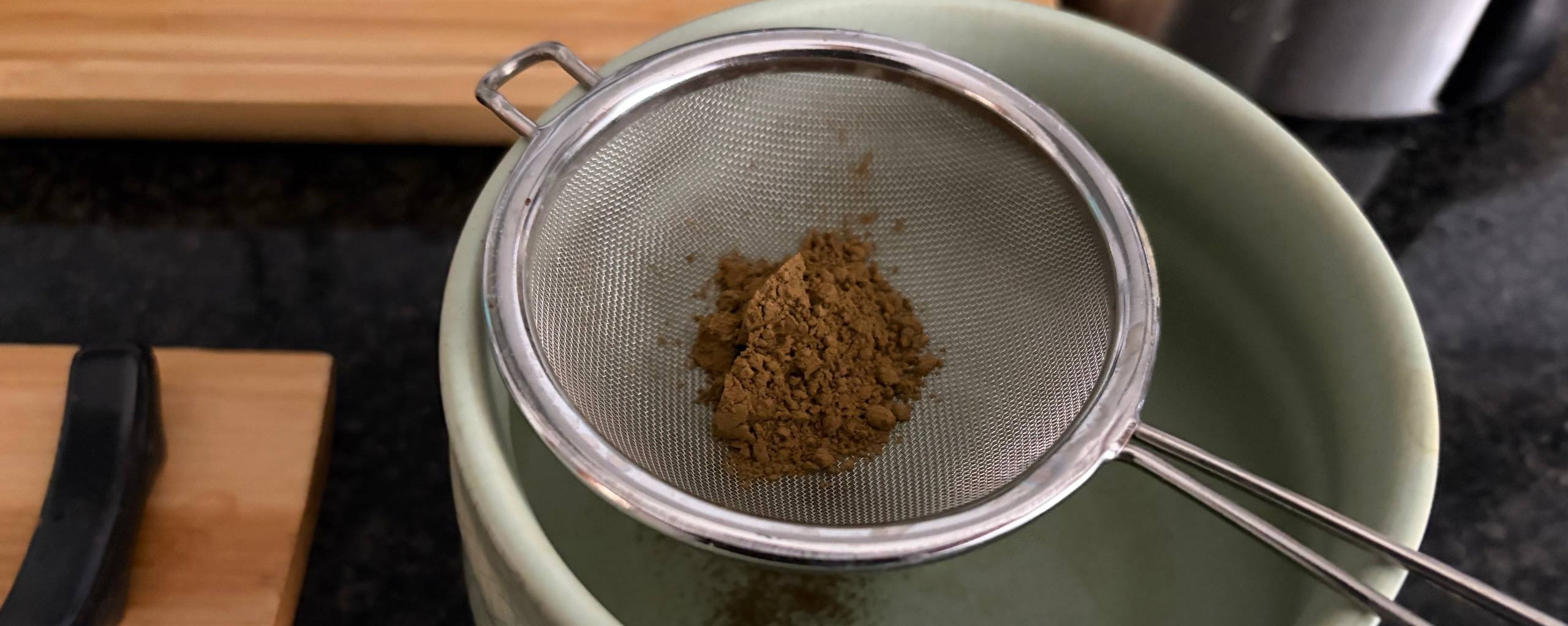 The powder before smoothing through the strainer
I then start breaking the powder and any possible clumps by doing circular movements of pressure on top of the strainer, resulting in a smooth texture falling down to the chawan. I also prepare a glass with a couple of ice blocks and the oat milk.
At this point the water is already at the right temperature, so I pour the amount I desire into the chawan. I’m sure there’s the right amount of water to pour, but it’s unknown to me, I discovered the amount that sets the taste to my liking by trial and error. Once the water is poured I whisk it together with the powder, by moving the chasen in a vertical zig-zag manner for half a minute, always avoiding touching the bottom of the chawan so it aerates the tea and creates a nice creamy and smooth foam on top.
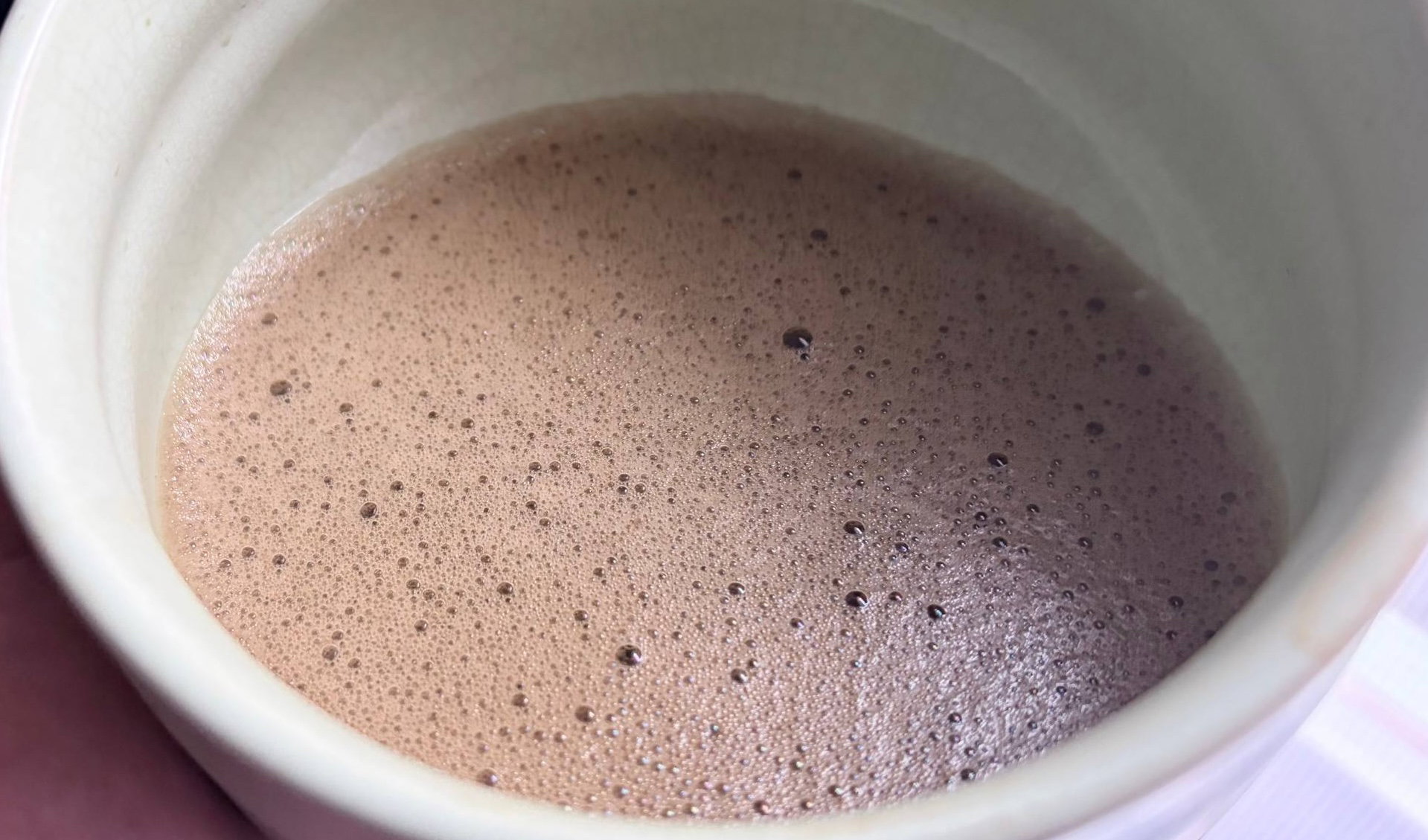 The creamy foam after whisking
Once done, it’s time to mix it with the oat milk already set up. I let it fall in a circular movement so it spreads evenly on the surface, and watch it drop and blend from the outside. There’s something so aesthetically pleasing in the way the hōjicha blends with the oat milk, it always makes me pause for a few seconds, almost as if the whole point of brewing the tea was to experience this moment rather than drinking it.
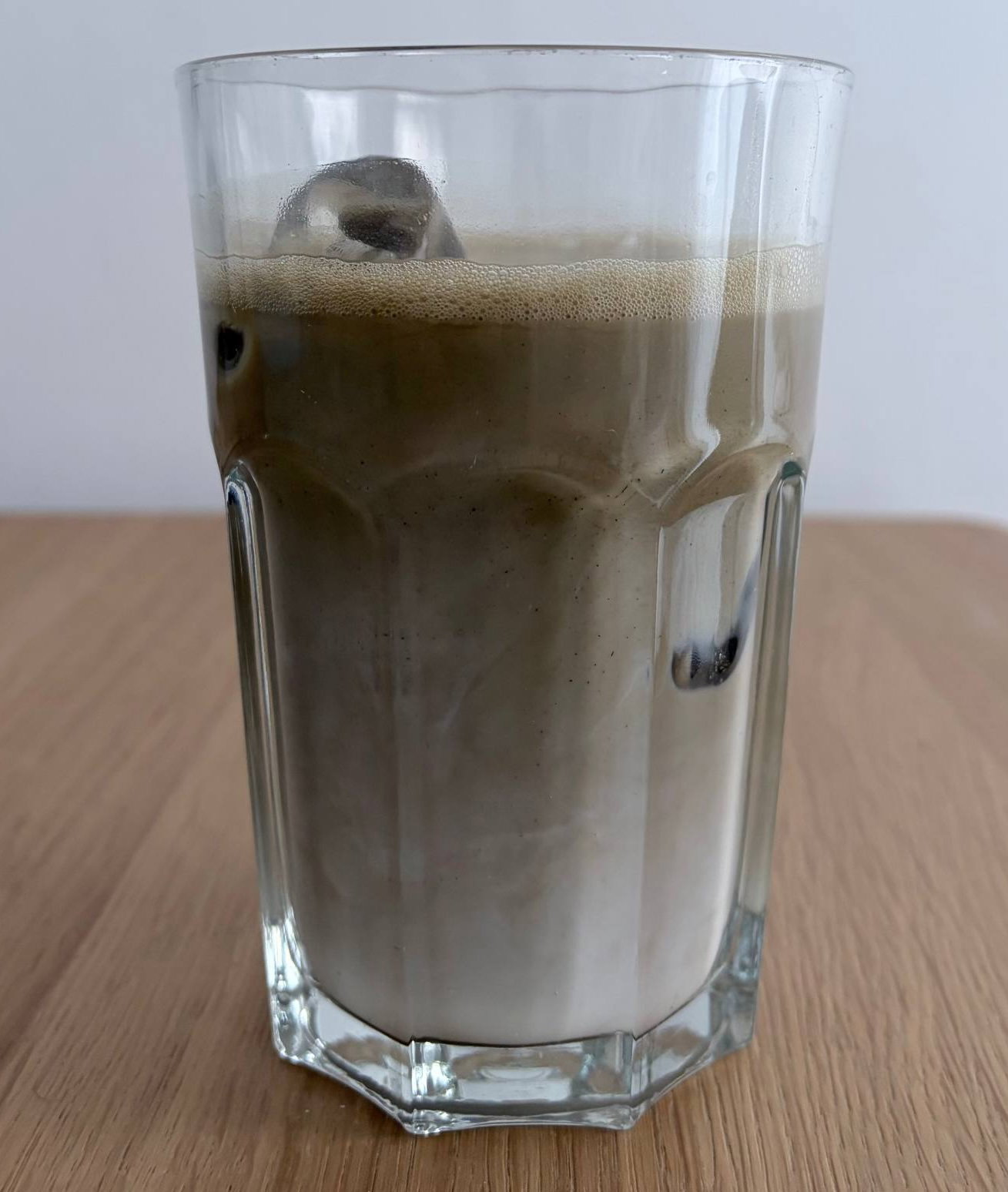 Hōjicha slowly blending with the oat milk
I could buy the hōjicha in teabags and just let it brew in hot oat milk. But I know I wouldn’t do that, I know the teabags would be sitting next to the other teas we have at home for years until they expired.
In my last post I mention how new tools are shaping our craft, or lack thereof due to the velocity such tools provide. In such a world I find myself accidentally finding craft in mundane everyday things, like making a glass of hōjicha latte. And I don’t think I’m alone with this.
I’ve noticed how more people are getting into specialty coffee brewing at home lately, and how Lego is making a come back. I’d argue this is not coincidence. In the fast paced world we live in, where everything strives to be as convenient as it can for us, where there’s more information and inputs that we can humanly handle, I think we, as humans, still crave the slowness of things.